
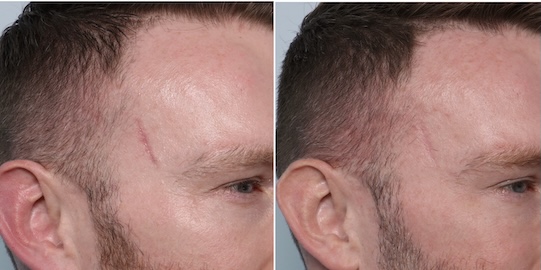
When Is It Too Soon to Treat a Scar?
Dr. Vincent Richer
Treating scars from surgery: as soon as possible or wait until the scar is mature?
One of the most common questions we hear from patients concerned about surgical scarring is: What is the best time to treat the scars from my surgery?
It is an entirely reasonable question! There is often an assumption that scar treatment should only be considered once our body has done all it can to recover. The reality is a little more nuanced. Understanding the biological process behind scarring is helpful to see the full picture.
Scars evolve over time
After an injury like surgery, the skin goes through several overlapping stages of healing and remodelling.
During the initial healing phase, the body works to repair the surgical site and restore the skin barrier. Collagen is produced to restore structural strength to the skin. Often, sutures (stitches) are in place during this time.
Later, collagen is reorganized as the scar matures. This latter process can continue for 12–18 months or longer. During this time, it is normal for a scar to change in appearance and to feel different. It may initially look pink or red, feel firm, or appear slightly raised. Feeling some itch is common. Gradually, many scars become flatter, softer, and less noticeable.
However, not all scars follow the same trajectory. Weeks to months after surgery, some scars continue to remain red or become thickened. Later, widening of the scar may be observed, as well as the development of persistent textural irregularities. A mature scar is expected to appear more white than the surrounding skin, however in some cases it may create significant contrast.
Is it too early to come in for a consultation?
Generally, no. We encourage all of our patients to follow their surgeon’s care recommendations to the letter, and to speak with them prior to seeking scar treatment.
You do not need to wait a year or more for a scar to mature before having it assessed. My general recommendation is simple: If you are concerned about the appearance of a scar, there is no need to wait until it has fully matured before seeking an opinion.
An early consultation allows us to evaluate your personal history with scars, how your skin type usually heals, the risk factors for abnormal scarring at the site and your motivations or expectations regarding treatment. Importantly, an early consultation does not necessarily mean an early procedure. Physical examination will help establish whether the scar is progressing normally, whether there are opportunities for earlier intervention, or whether it is best to allow more time for healing if your body is already doing optimal work.
The optimal timeline for consultation for a scar depends on your goals
The patients who come to us for help with scars are usually in one of two categories:
- Early proactive optimization
- Targeted correction of a problematic scar
Scientific evidence shows that early intervention during active healing yields a better long-term cosmetic outcome compared to watchful waiting and letting a scar fully mature on its own. Interventions during this phase also tend to be safer and easier to recover from for patients. Patients who decide to intervene early are often either motivated by getting the absolute best long-term outcome, or they want to expedite the improvement of a distracting scar, especially if it is on the face and if they have a public-facing occupation.
Conversely, we fully grasp how someone might want to see how well their skin will heal, especially if they have not developed abnormal scarring in the past and if their scar is at a discreet site on the body. Both approaches represent different philosophies and are entirely viable.
Many patients seek help if symptoms develop within a scar, if they stop seeing improvement or if abnormal scarring develops: thankfully, there are many options to improve the appearance of scars. 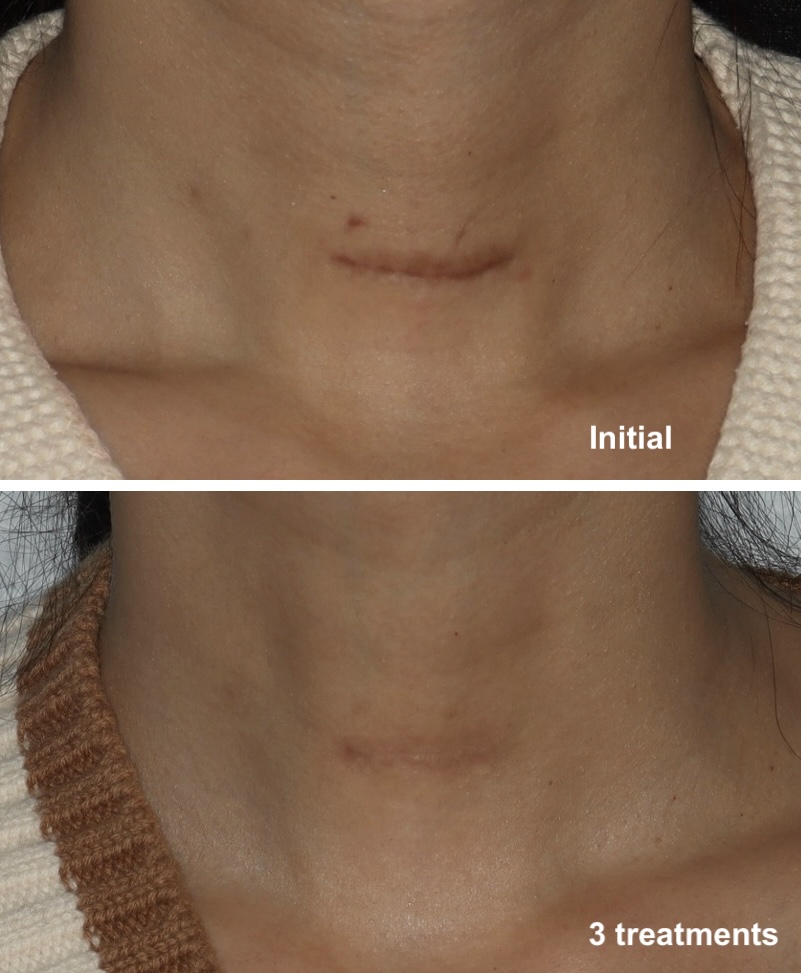
What can be done at Atelier for surgical scars?
Scar treatments at our clinic are personalized and often combined to target multiple features of a scar simultaneously. A guiding principle is that the features of a scar usually guide the interventions that will yield improvement:
With a series of treatments, we can get significant and meaningful improvement of:
- Itchy or painful scars by using scar injections
- Raised scars (hypertrophic or keloid) by using scar injections
- Red scars by using vascular laser
- Textural scars by using laser resurfacing
These are often the treatments we use for early scar optimization.
Some scar types are more challenging to improve, and though they can be treated, improvements tend to be more modest and require more treatments:
- Darker scars (hyperpigmented) by using picosecond laser and prescriptions
- White scars (hypopigmented) by using laser resurfacing and topical medication
- Scars on the extremities, especially on the lower legs
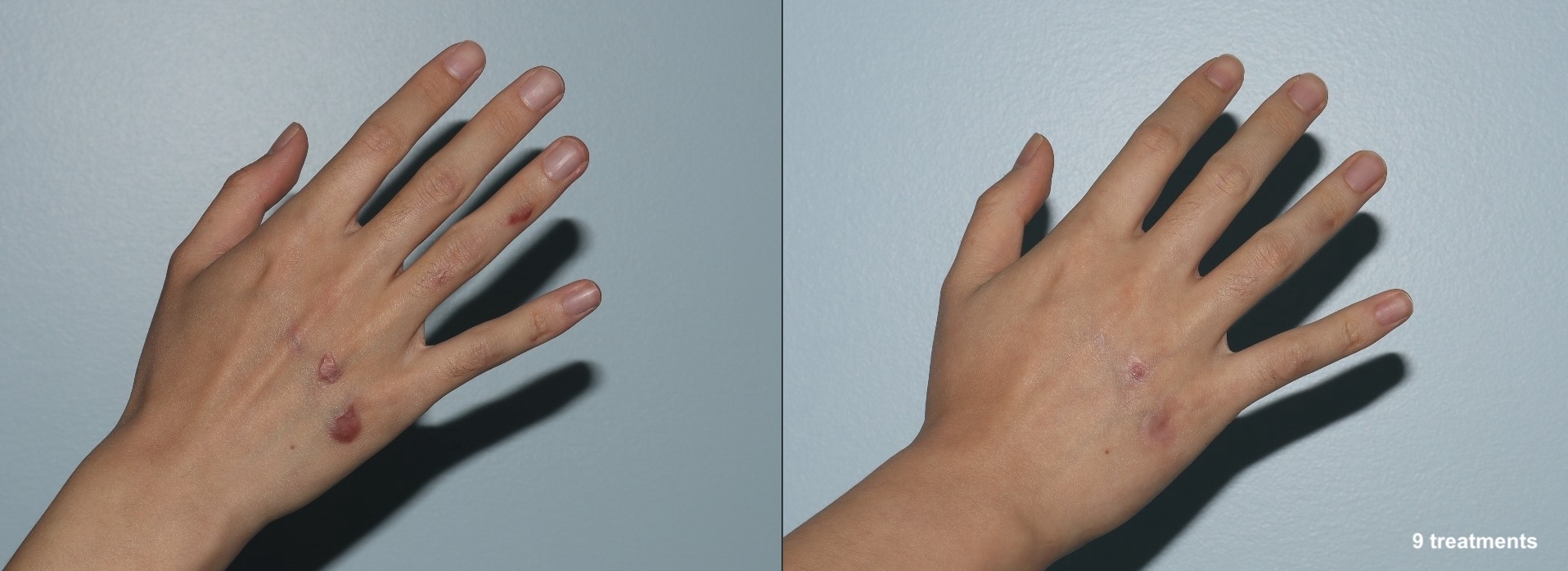
Sometimes – and this is usually in the context of mature scars – a scar may look about as good as it can get! In consultation, we discuss the yield of treatments so our patients can make the decision if it is meaningful enough for them to initiate treatments or not. Discussing the expectations around the level of improvement, as well as looking at representative examples from our practice, helps with decision-making. Making a scar “disappear” is not usually possible – our goal is to make it less obvious or distracting and to improve the appearance of the skin.
What if my scar is already several years old?
It is certainly not too late – sometimes we treat scars that are 20 years old…! Although scars undergo substantial remodelling during the first year or so, older scars can still respond to treatment. The important consideration is identifying what aspect of the scar we are trying to improve. Is the concern redness? A depressed or indented appearance? Uneven texture? A raised area? As highlighted earlier, we approach these in very different ways.
Let’s get started
An assessment with Dr. Vincent Richer can help clarify where a scar is in the healing process and which treatment options may be suitable for your individual needs.